
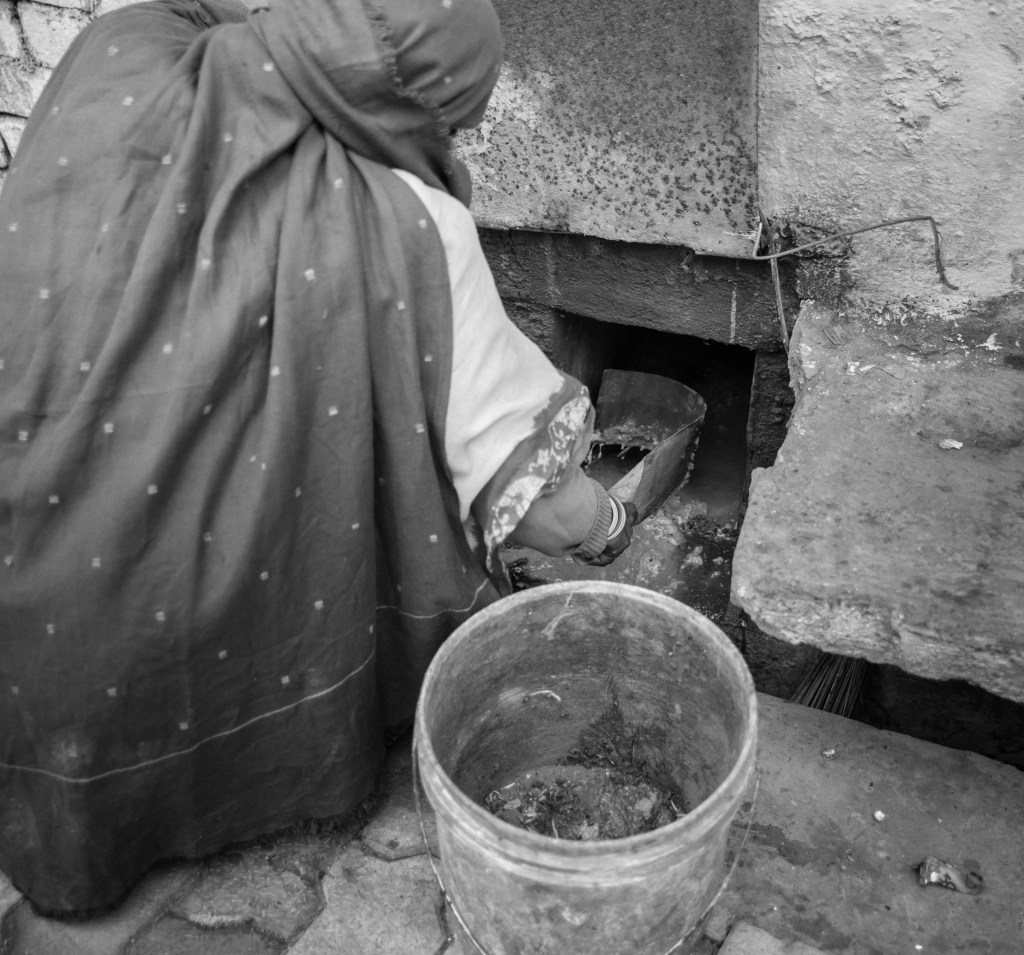
Manual scavengers in India, under the caste system experience severe denial of basic human rights throughout their lifetime cleaning human excreta in dry latrines, rarely having a chance for social mobility. Those people, hardly able to find a better option to earn their living costs, have to risk their lives every time cleaning the dry latrines and are frequently found dead under the chocked sewage. Around 339 scavengers lost their lives for the past five years, but the number of the deaths tolls may inaccurately reflect the reality as the country is banning the practice, making it harder to track the real numbers.
Before diving into the list of legal actions from the government to ban the practice, this report traces back to the historical era to discover how such practice became a customary duty, particularly to vulnerable society members. From ancient to medieval to colonial period, people in lower class were pushed to do the job, and people gradually accepted the such work as a duty of a lower class people. This inhumane practice is known to be illegal in India, but not all population are protected under the legal boundaries. The life of the manual scavengers are continuously reported onto this day.
To address the government’s failure in protecting individuals from the dangers of manual scavenging, private sectors can step in to fill the gaps by launching their own ESG/CSR activities. Corporations in different industries can participate, directly the toilet companies or businesses already involved in sanitation activities may come up with more effective measures and policies as they already may have some experiences and knowledge.
As one example, the Vitra A India provides personal hygiene and toilet training to school students with renovation of school dormitory and classroom sanitary facilities as for their social activities. Such actions well align with their main products and services as well. By implementing more CSR programs that help students to learn from an early stage about the truth of the open defecation and how such actions are resulting to devastating impact, not only it will it aid the government in eliminating practices of manual scavenging, it will also go along with the UN SDGs (below goal 6,10,11). Companies while implementing their CSR programs and connecting their initiative to UN SDGs, is what private sectors should be aiming of.
SDG Goals
- Goal 6: Clean Water and Sanitation
- Goal 10: Reduced Inequalities
- Goal 11: Sustainable Cities and Communities
Overall, directly providing the sanitary facilities will help but to uproot the general biases attached to manual scavengers, it will require long-term initiatives. Most of the scavengers feel scared to reveal the truth, where the societal perspective on the work is usually linked to the feelings of shame and embarrassment.
Government actions often failed to reach communities in extreme needs due their insufficient consideration of the local context such as illiteracy. Genuine actions of the government will not stop from banning the practice but will further help the scavengers find new jobs and by safely re-locating them in other job areas.
These lessons are also applicable to private sectors when to launch a long-term CSR imitative. Prior to launching any community based plans, in-depth research on the local context will enhance their CSR/ESG initiatives to be more effective.



 Yeon joong kim's Website
Leave a comment