
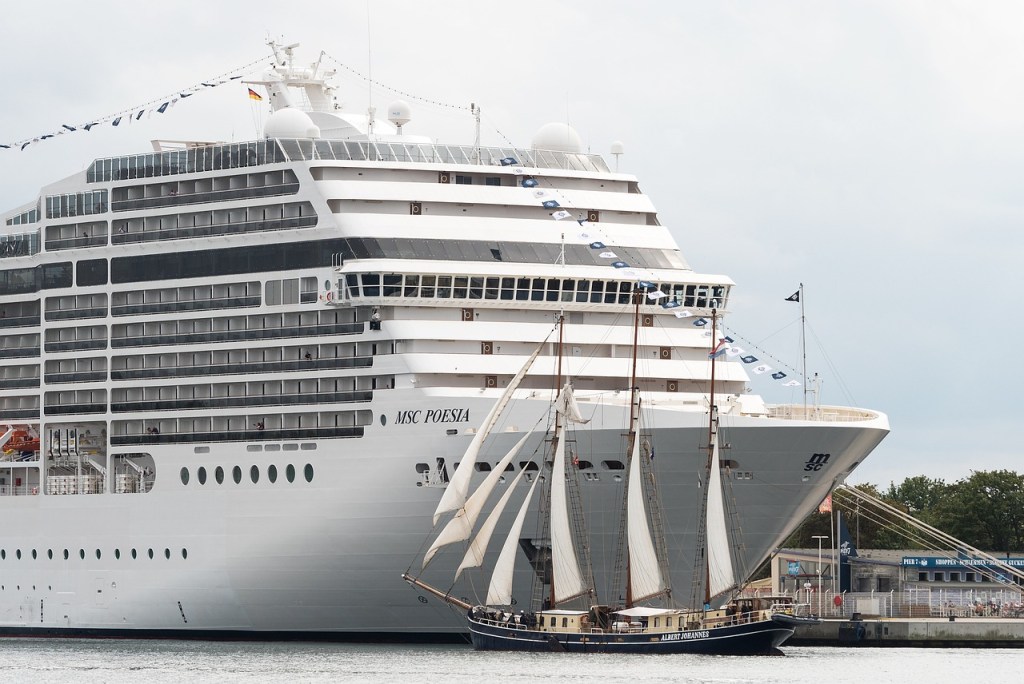
Image credit : Pixabay
Despite their fancy and luxurious appearance, do cruise ships and cruise tourism truly embody sustainability? How can we define and discover sustainability within one of the world’s largest recreational industries?
Before exploring the concept of sustainable cruise tourism, it is essential to ask: when was sustainability first considered in the context of industrial development? The study presents conservation vision as the earliest form of sustainability where humans segregated hunting zone for eco-system protection. Such a view suggests that earliest human perspectives recognized the overexploitation of the eco-system as harmful to future generations. Moving from an ancient concept to dominant theory of the 1990s, the same study outlined community involvement in the tourism industry, asserting that residents adjacent to or within the tourist site should engage in increasing sustainability of the surrounding environment as they are the direct beneficiaries of local tourism. Five years after the term ‘sustainability’ became widely known thorough the Brundtland Commission in 1987, the Earth Summit’s Agenda 21 also stated about the forest eco-tourism stating that “it is possible to increase the value of forests through non-damaging uses such as eco-tourism and the managed supply of genetic materials.” This highlights the importance of non-damaging use of the ecosystem resources, a principle relevant across industries with environmental impacts.
How devastating will cruise ships be to the environment? One of the most disastrous impact known to be caused by the cruise ships are on the auxiliary engines used at the port to drive the onboard power plant (Klein). The paper indicated by citing California Air Resources Board that when cleaner fuels are used for the auxiliary engines, it could save 3,600 lives in coastal communities with reduced respiratory illness, heart diseases and potential cancers that may have caused by the ship pollutants. Moreover to the fuel emissions, thousands of passengers are generating graywater with a large amount of human sewage, but due to spatial limitations, it often fails to execute proper treatment process leading to an increased marine pollution. While the cruise ship industry is trying to alter to their fuel to cleaner energy source, LNG, the industry is still far behind in meeting the growing demand of the strict environment regulations such as EU Maritime environment regulations.
From a social perspective, the groups to consider are the maritime workers, passengers and the people residing along the coastline, especially near the port.
The cruise ship workers due to its unique working condition, often experience irregular work hours, low wages, and substandard accommodations, etc. The maritime workers, according to the Maritime Labour Convection 2006 by the International Labour Organization (ILO) require a special protection, and the convention defines the work hour of the maritime workers be limited to 14 hours a day and 72 hours a week. While it will be critical for a host country to be one of the signatories of the MLC, the rights of the maritime workers should be internationally recognized with all host countries agreeing upon these rights.
The cruise ship will gather thousands of people with different cultural backgrounds. While sailing, their social and cultural values should be respected, with no underrepresentation of a certain culture. The cruise will be a place where different cultures meet and the way to create a sustainable tourism culture will be by respecting the diversity.
The coastal communities are one of the main beneficiaries of the cruise tourism but not everyone views it as benefits. The port communities are exposed to high health threats due to environmental pollution generated by the ships due to their fuel emissions while the being moored at ports. Other concerns involve airborne diseases, water pollution, impacts to the seafloor and the growing demand to fulfill the number of infrastructures for the tourists.
With growing ESG demands and the stricter environmental regulations being imposed on the industries, the cruise tourism will also experience bigger pressure as they fail to meet those demands. To negotiate sustainable changes, it will need to apply innovate technologies as well as to execute continuous communication with the stakeholders from different sectors.
[Yeon Kim’s SDGs, ESG, CSR] [2023]. All rights reserved.
The content on this blog is the intellectual property of [Yeon Kim]. Unauthorized use and/or duplication of this material without express and written permission from this site’s author and/or owner is strictly prohibited. Excerpts and links may be used, provided that full and clear credit is given to [Yeon Kim] with appropriate and specific direction to the original content.



 Yeon joong kim's Website
Leave a comment